
Did the Narcissist Ruin Me for Other Intimate Partners?
Introduction
Emerging from a relationship with a narcissist often feels like staggering out of a psychological battlefield. The emotional landscape is littered with landmines: self-doubt, trust issues, hyper-vigilance, and a warped sense of love and intimacy. Survivors frequently ask themselves a haunting question: "Did the narcissist ruin me for other intimate partners?"
The answer isn’t simple. Narcissistic relationships are intense, often beginning with intoxicating love-bombing and ending in emotional desolation. The aftermath leaves scars—deep, invisible ones—that can bleed into future relationships. But ruin? No. Damaged, yes. Changed, absolutely. But not irreparably ruined. Healing is possible, though it requires self-awareness, patience, and deliberate emotional work.
In this blog, we’ll explore how narcissistic abuse impacts your ability to form healthy romantic connections, identify key areas of growth, and provide actionable strategies to reclaim your emotional intimacy.
1. The Aftermath of Narcissistic Abuse: How It Changes Your Relationship Blueprint
Emotional Scarring and Hyper-Vigilance
One of the most common aftershocks of narcissistic abuse is hyper-vigilance. You may find yourself over-analyzing every word, tone, or facial expression in new relationships. A harmless disagreement might feel like a prelude to manipulation or abandonment. This constant state of alertness isn’t about paranoia—it’s your brain trying to protect you from repeating past trauma.
Psychologists often describe this as a form of post-traumatic relationship syndrome. Your nervous system becomes conditioned to anticipate danger in love, and genuine care might even feel suspicious.
Trust: The Shattered Mirror
Trust is another casualty of narcissistic relationships. The narcissist likely exploited your vulnerabilities and used your trust as a weapon. When someone you loved and trusted betrays you repeatedly, rebuilding that trust—especially with yourself—becomes a monumental task.
You might doubt your own judgment, wondering, “How could I have missed the signs?” or “Can I ever trust myself to choose a good partner again?”
Distorted Views of Love and Intimacy
Narcissists often equate love with control, attention with worthiness, and emotional highs and lows with passion. Over time, survivors may internalize these patterns, mistaking chaos for love and peace for boredom. A healthy, calm relationship might feel oddly unfamiliar or even unsatisfying because it doesn’t trigger the same emotional adrenaline spikes.
These distorted beliefs about intimacy become part of your emotional programming, shaping how you perceive love in your next relationship.
2. Key Emotional Barriers to Future Relationships
Fear of Vulnerability
In a narcissistic relationship, vulnerability was likely met with ridicule, dismissal, or exploitation. Showing your soft spots became dangerous, and self-protection became the norm. Carrying this fear into future relationships can prevent deep emotional connection. You might build emotional walls so high that no one can truly reach you.
Dark to the Core is a forensic breakdown of how destructive personalities operate—across relationships, institutions, and entire systems.
This book examines six traits that define what psychologists call the “Dark Core”: narcissism, psychopathy, Machiavellianism, sadism, egoism, and entitlement. These traits don’t always act alone—they overlap, reinforce, and escalate. The result is a pattern of abuse that’s disturbingly predictable once you know what to look for.
Inside, you’ll learn:
The psychological structure of narcissistic, Machiavellian, and sadistic abuse
How manipulative people exploit love, family, and systems of care
The phases of coercive control in romantic relationships
How children are used as tools of control and vengeance
How courts, therapists, and churches are co-opted by abusers
What happens when coaching, spirituality, and therapy become new stages for manipulation
Why false accusations, smear campaigns, and “virtuous” cruelty follow a template
How to document, name, and confront abuse effectively
This book is not a memoir. It’s not a trauma journal. It’s a strategic guide for anyone trying to understand the logic of domination—and how to break its hold.
📖 Illogical Abuse: A Guide to Identifying and Resisting Psychological Manipulation (ebook)
Not all abuse leaves bruises.
Illogical Abuse is a forensic dive into the twisted logic, emotional traps, and weaponized empathy that define psychological abuse in the narcissistic age. This book is a lifeline for anyone who's been gaslit, stonewalled, triangulated, or told that they're the crazy one.
In this sharp, methodical guide, you’ll uncover:
How manipulators hijack reason and redefine reality.
The hidden structures of control beneath victim narratives.
Why logic, language, and identity are the first casualties in abusive dynamics.
How to recognize patterns of psychological warfare—before they escalate.
The antidotes: tools, frameworks, and clarity to reclaim your voice and agency.
Whether you’re in recovery, in court, or just waking up to the madness, Illogical Abuse delivers clarity where there was once confusion—and evidence where there was once only instinct.
Ideal For:
Survivors of narcissistic abuse
Mental health professionals
Legal advocates and forensic experts
Anyone seeking truth in a world where truth is twisted
📥 Download your copy now and start seeing the patterns clearly.
#psychologicalabuse #gaslighting #narcissisticabuse #truthmatters #abuselog #mentalhealthawareness #forensicpsychology #recoveryjourney #manipulationawareness

What if emotional abuse had a recipe?
Cluster B Soup serves it hot.
In this sharp, unflinching field guide to modern manipulation, we explore the four most toxic ingredients in abusive dynamics—Narcissism, Borderline, Histrionic, and Antisocial Personality Disorders—and the psychological “recipes” they follow to destabilize, control, and devour.
From gaslighting and guilt-tripping to love bombing and smear campaigns, this book reveals the hidden patterns of Cluster B abuse—not as random outbursts, but as predictable, repeatable strategies. With equal parts clinical insight and cultural critique, Cluster B Soup exposes how these disorders infiltrate families, relationships, courtrooms, and causes.
Whether you're healing from a high-conflict relationship, decoding a toxic co-parent, or spotting manipulative behavior in public life, this is your survivor’s cookbook for psychological clarity.
📘 Inside You'll Find:
– A breakdown of each Cluster B disorder and its emotional blueprint
– Over 50 manipulation tactics decoded and deconstructed
– Real-life examples from therapy, court cases, and cultural trends
– Tools to reclaim identity, protect boundaries, and resist coercion
📚 Perfect for:
• Survivors of narcissistic or borderline abuse
• Therapists, coaches, and legal advocates
• Anyone tired of being gaslit and ready to see the playbook
Read it. Name it. Burn the recipe.
Because survival starts with knowing what’s in the soup.
🔍 Unmask the Patterns. Reclaim Your Power.
This downloadable e-pamphlet is your go-to guide for identifying and documenting covert emotional abuse. Perfect for survivors, therapists, and advocates alike.
📘 What You’ll Learn
💬 Manipulative Communication
Gaslighting, word salad, guilt-tripping, blame-shifting
🔒 Control Tactics
Isolation, surveillance, financial sabotage, smear campaigns
💔 Emotional Conditioning
Love bombing, fear induction, trauma bonding, future faking
🪞 Self-Esteem Erosion
Name-calling, character assassination, shaming, devaluation
🛐 Spiritual & Moral Abuse
Religious guilt, moral superiority, confession coercion
🧠 Entrapment & Identity Fusion
Helplessness conditioning, suicidal threats, forced loyalty
🎭 Tactical Roleplay
The Martyr, The Judge, The Savior, The Child
⚖️ Legal & Parental Abuse
DARVO, parental alienation, system grooming
📖 Narrative Control
Victim-blaming, fake accountability, “truth-teller” deception
Dark Core Traits & Characteristics Checklist
🔥 Understand the Psychology That Powers Abuse. Document It with Precision.
Some of the most devastating abuse is not loud—it’s calculated, covert, and corrosive. The Dark Core Traits & Characteristics Checklist helps you identify these dangerous patterns—rooted in traits like Machiavellianism, Narcissism, Psychopathy, Sadism, Moral Disengagement, Egoism, Entitlement, and Dehumanization. 🧠 Whether you’re a survivor, advocate, or mental health professional, this tool empowers you to name what’s happening—before confusion turns to damage.
⚠️ Not a Diagnostic Tool
This checklist is intended for informational and awareness purposes only. It is not a substitute for clinical diagnosis and should not be used to label others without professional evaluation.
💡 Why Awareness Matters
When you understand dark core behaviors—like manipulation, calculated charm, lack of empathy, or sadistic control—you’re better equipped to recognize abuse in relationships, family court, institutions, and parenting dynamics. Naming the pattern is often the first step toward breaking it.
📓 Revolutionize Documentation with The Abuse Log
This checklist is fully interactive within the Abuse Log Notion Template—our trauma-informed system for documenting abuse across emotional, legal, financial, and parental domains. Use it to: ✔️ Log incidents by trait and context
✔️ Track escalation and frequency over time
✔️ Prepare evidence for therapy, court, or personal closure
✔️ Build a forensic record of psychological harm
🌐 Learn more or get started at: www.abuselogapp.com

🧠 Your quick-reference guide to understanding personality disorders with clinical precision.
This downloadable checklist breaks down all 10 DSM-5-TR personality disorders—organized by Cluster A (Odd), Cluster B (Dramatic), and Cluster C (Anxious). Each disorder includes diagnostic criteria, symptom thresholds, and key age requirements for accurate identification.
📘 Includes:
🔷 Cluster A: Paranoid, Schizoid, Schizotypal
🔶 Cluster B: Antisocial, Borderline, Histrionic, Narcissistic
🟡 Cluster C: Avoidant, Dependent, OCPD
✔️ Clinically grounded
✔️ Easy-to-scan format
✔️ Ideal for survivors, therapists, and legal prep
Pair it with our Abuse Log Notion templates to track disordered behavior and support your healing or casework.

🧠 Decode the Language of Abuse. Name What Was Never Named.
This comprehensive glossary defines 300+ terms used in toxic, abusive, and manipulative relationships—spanning emotional, legal, spiritual, financial, and institutional abuse.
Whether you’re a survivor, advocate, therapist, or preparing for court, this resource helps you recognize covert tactics, reclaim clarity, and speak your truth with precision.
📘 What’s Inside:
🧩 Emotional Abuse – Gaslighting, breadcrumbing, trauma bonding, silent treatment
⚖️ Legal Abuse – DARVO, custody interference, protective order misuse
💔 Relational Manipulation – Enmeshment, triangulation, forced compliance
🛐 Spiritual Coercion – Religious guilt, purity tests, moral gaslighting
🎭 Tactical Roleplay – The Martyr, The Savior, The Judge, The Victim
📖 Narrative Control – Weaponized empathy, fake accountability, reputation attacks
🏛️ Institutional Tactics – Therapist collusion, structural gaslighting, misuse of diagnosis
💡 Why It Matters
✔️ Build language for therapy, affidavits, or custody disputes
✔️ Understand what happened—on your terms
✔️ Shift from confusion to credibility
🧾 Pair with Abuse Log
Use this glossary alongside our Notion-based Abuse Log documentation system to track patterns, log incidents, and support your legal or healing journey.
🌐 Learn more at www.abuselogapp.com
For Leaving an Abusive Relationship: Legal, Emotional, and Tactical Tools for a Secure Exit
🛡️ Leaving someone with Dark Core traits—narcissism, psychopathy, Machiavellianism, or sadism—is not like leaving a normal relationship. The most dangerous moment is often the moment you try to leave. That’s why safety isn’t a suggestion—it’s a strategy.
This comprehensive, trauma-informed, and court-conscious planning guide walks you through every phase of a secure exit—from psychological readiness to financial preparation, digital safety, legal documentation, and post-breakup boundary enforcement.
📘 What You’ll Get:
✅ Psychological Preparation – Undo trauma-bonding and rewire survival scripts
✅ Exit Network & Digital Safety – Build a quiet, reliable support plan
✅ Legal & Financial Readiness – Gather documents, secure accounts, protect identity
✅ Tactical Exit Strategy – Whether they’re leaving or you are
✅ Fallout Management – Gray rock, co-parenting boundaries, and legal retaliation
✅ Ongoing Regulation – Heal your nervous system and reestablish control
✅ Printable Go-Bag Checklist – Don’t forget a thing when it’s time to move
🔗 Integrates Seamlessly with The Abuse Log
Pair this guide with The Abuse Log Notion Template to:
✔️ Document incidents in real time
✔️ Track risk levels and exit readiness
✔️ Support court filings and protection orders
✔️ Reclaim your clarity and credibility—step by step
Explore the system at 👉 www.abuselogapp.com
📎 Also Includes:
🧷 Grab-and-Go Emergency Bag Checklist
🆘 Hotlines & Safety Resources
📓 Journaling prompts and trauma de-escalation tools
🧠 Empowering mantras for emotional stability
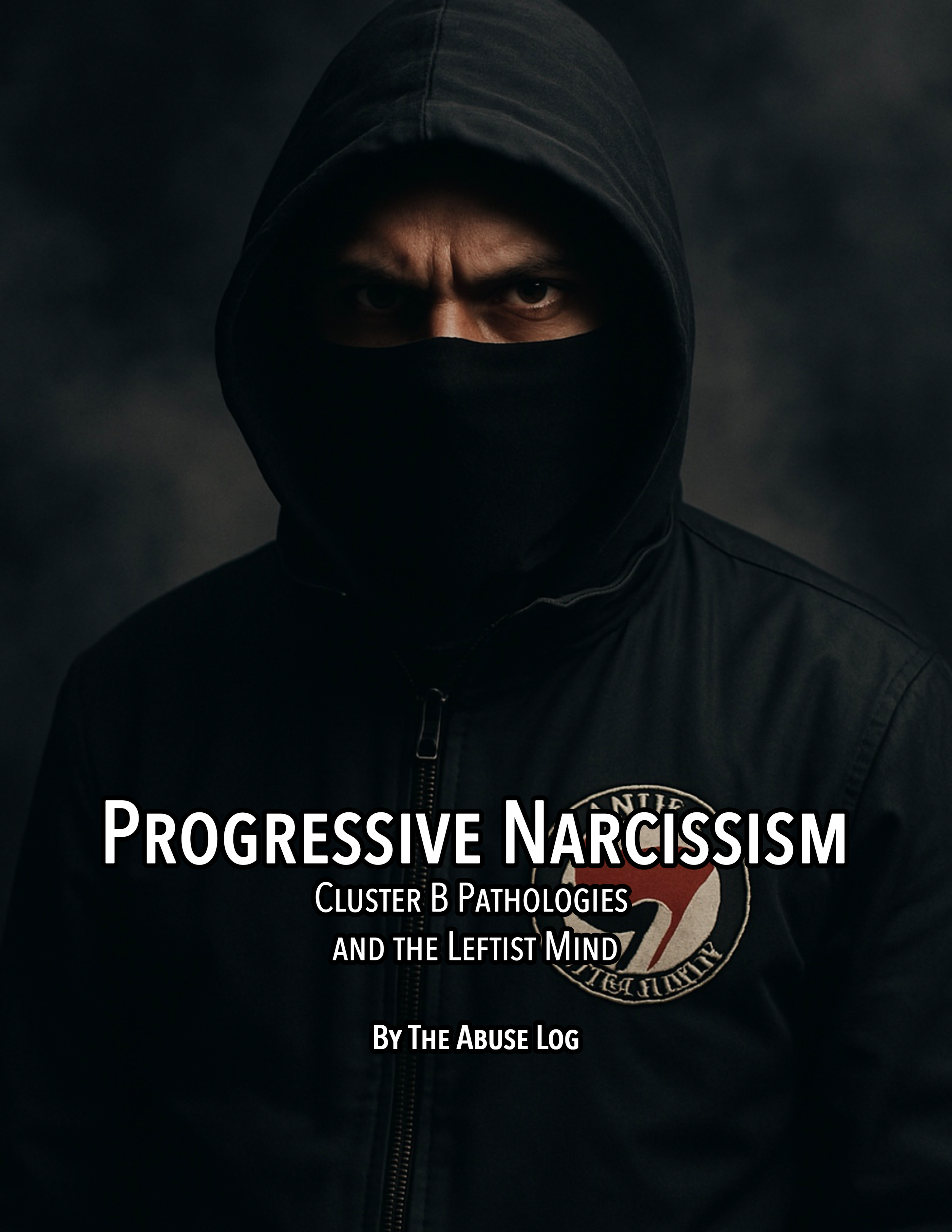
Progressive Narcissism reveals how modern progressive ideologies mirror Cluster B personality disorders—narcissism, borderline, histrionic, and antisocial traits. Through psychological, political, and cultural analysis, it exposes how emotional manipulation, fragility, and coercion now define activism, replacing truth with identity and order with chaos.
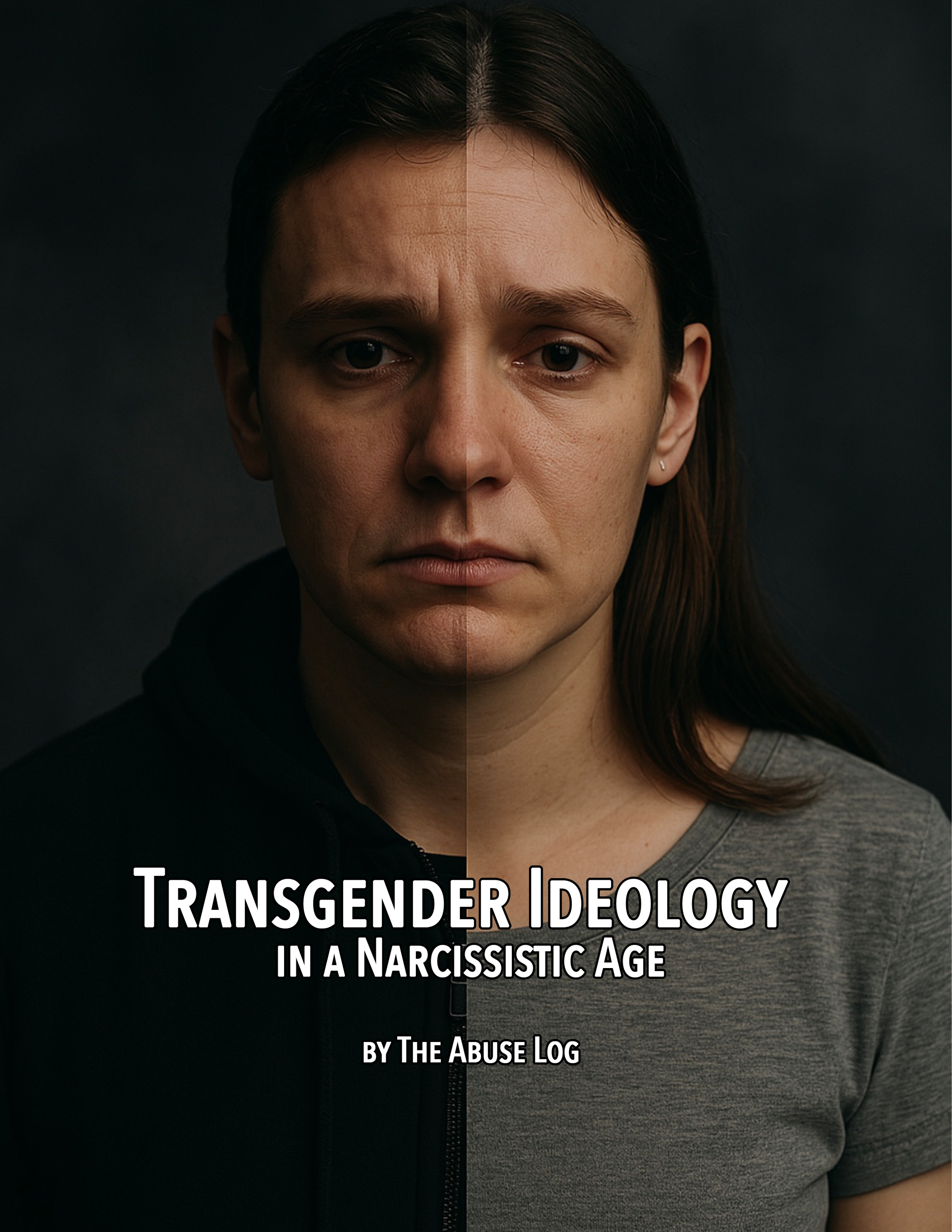
Transgender Ideology in a Narcissistic Age is a provocative and deeply researched cultural critique that exposes the psychological, medical, theological, and societal roots of transgender ideology. Drawing from diagnostic frameworks, biblical truth, and ethical medicine, The Abuse Log argues that the movement mirrors the traits of Cluster B personality disorders—particularly narcissism—on a societal scale. From the collapse of informed consent to the grooming of children through education and media, the book reveals how identity politics have transformed into a quasi-religious orthodoxy. With clarity and compassion, it calls for a return to reality, reverence, and moral courage in the face of institutionalized delusion.
![🗂️ The Abuse Log [Basic]](https://images.squarespace-cdn.com/content/v1/65b9553c448d7e5b0ec1dfcd/4c83e581-b720-4cbe-83b1-2d72e7a9ac8a/Logo+Gumroad-Basic.png)
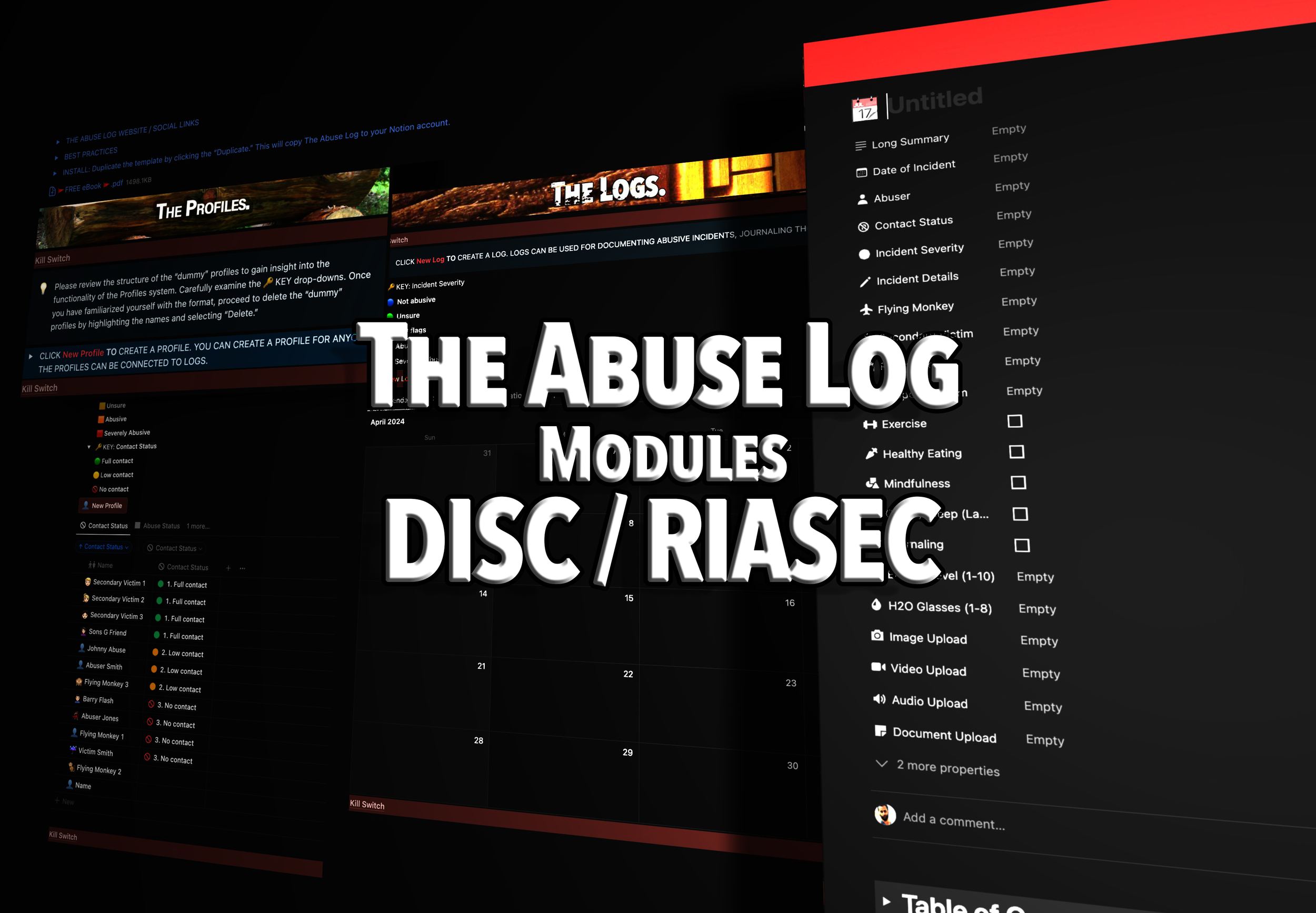
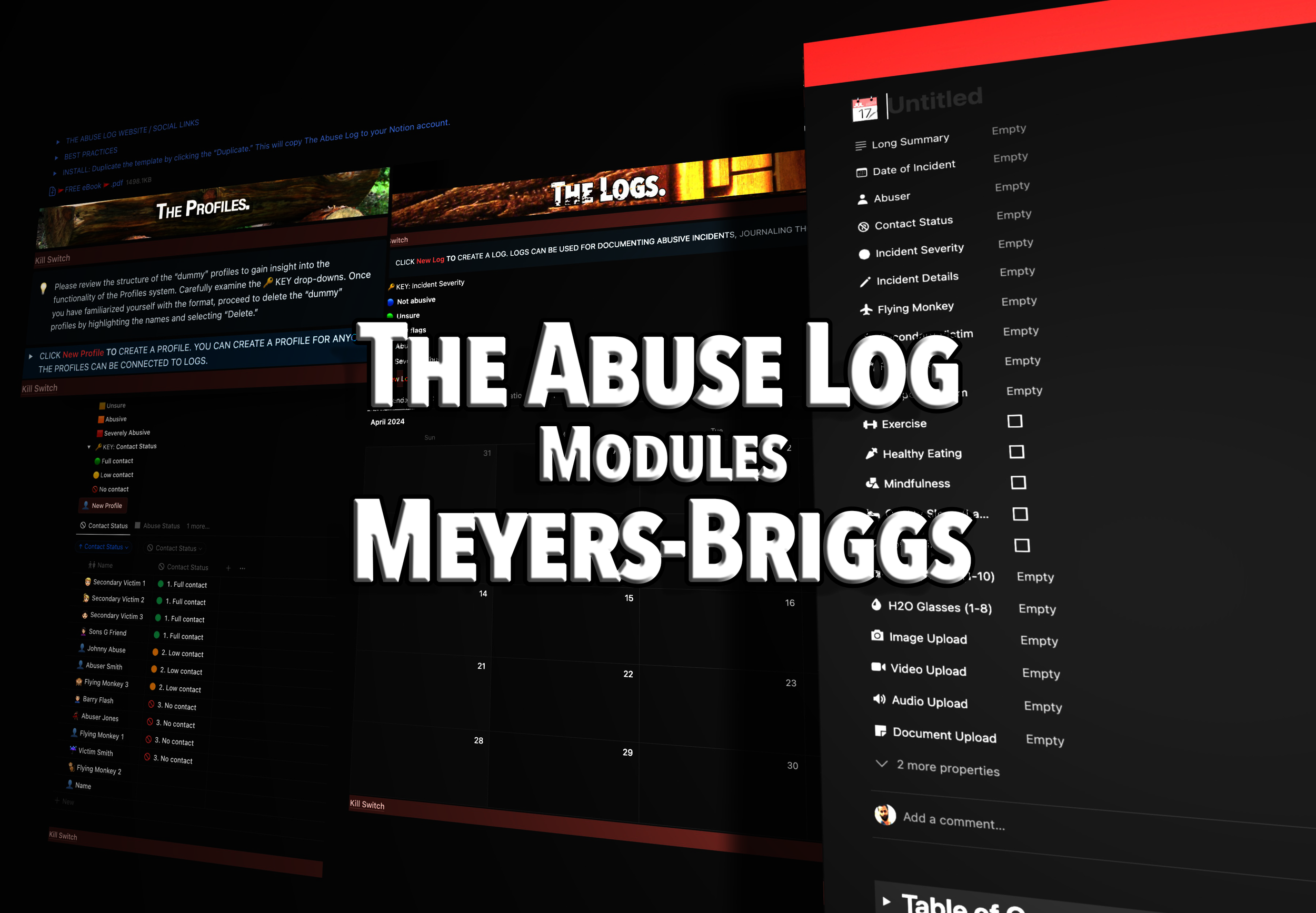
The Basic tier of The Abuse Log provides a solid foundation for individuals beginning to recognize and document patterns of abuse. This version is designed to be user-friendly, allowing for the easy logging of incidents and reflections on personal experiences. With key features to help identify abusive behaviors, it offers essential tools for forensic documentation that can assist in both legal and therapeutic settings. Whether you are starting your journey or need a simple, effective method to track events, the Basic tier is your first step toward empowerment and clarity.
Includes:
• Incident logging templates
• Behavior identification tools
• Secure storage for sensitive data
• Basic forensic documentation options
![🗂️ The Abuse Log [Advanced]](https://images.squarespace-cdn.com/content/v1/65b9553c448d7e5b0ec1dfcd/0d44e3de-2a17-4824-abe1-13b4daabea34/Logo%252BGumroadAdvanced.webp)
The Advanced tier of The Abuse Log expands on the basics by offering a more robust set of tools for those dealing with complex or ongoing abuse situations. This version adds a variety of customizable features that cater to victims who need more detailed tracking, in-depth forensic documentation, and enhanced legal support. With integrations to help prepare legal evidence, maintain privacy, and track patterns over time, this tier is ideal for those who are engaged in legal proceedings or who want more comprehensive records to aid in therapy.
Includes:
• Everything in the Basic tier
• Expanded incident tracking with detailed categories
• Tools for organizing legal documentation and evidence
• Customizable logs for abuse patterns
• Enhanced forensic reporting options for legal or therapeutic use
• Forensic Logs
• Extensive Profiles
• Media Uploads
• Log Secondary Victims
• Log Witnesses and Proxy Abusers
• Designed for Mental Abuse
• 100+ Comprehensive Checklists
• Contact Status
• Overall Abuse Status
• Daily Journal
• Daily Emotional Inventory
• Self-Assessments
![🗂️ The Abuse Log [Professional]](https://images.squarespace-cdn.com/content/v1/65b9553c448d7e5b0ec1dfcd/7fa18cea-edf4-4325-8234-13f3527579c2/Logo+GumroadProfessional.png)
The Professional tier of The Abuse Log is engineered for those who require the most advanced tools for documenting, analyzing, and acting on abusive behaviors. Tailored for law enforcement, legal professionals, mental health experts, and others in related fields, this tier offers comprehensive features for forensic-level documentation, multi-platform data collection, and detailed reporting that meets the highest professional standards. Whether you’re building legal cases, working in therapeutic settings, or conducting investigations, the Professional tier equips you with the expert-level resources needed to make an impact.
Includes:
• Everything in the Advanced tier
• Hundreds of professional add-ons for forensic, legal, and therapeutic use
• Multi-platform data collection with secure integration options
• Advanced forensic documentation and analysis tools
• Customizable reporting formats for legal proceedings, law enforcement, and mental health settings
• Tools for creating admissible evidence and reports that meet professional standards

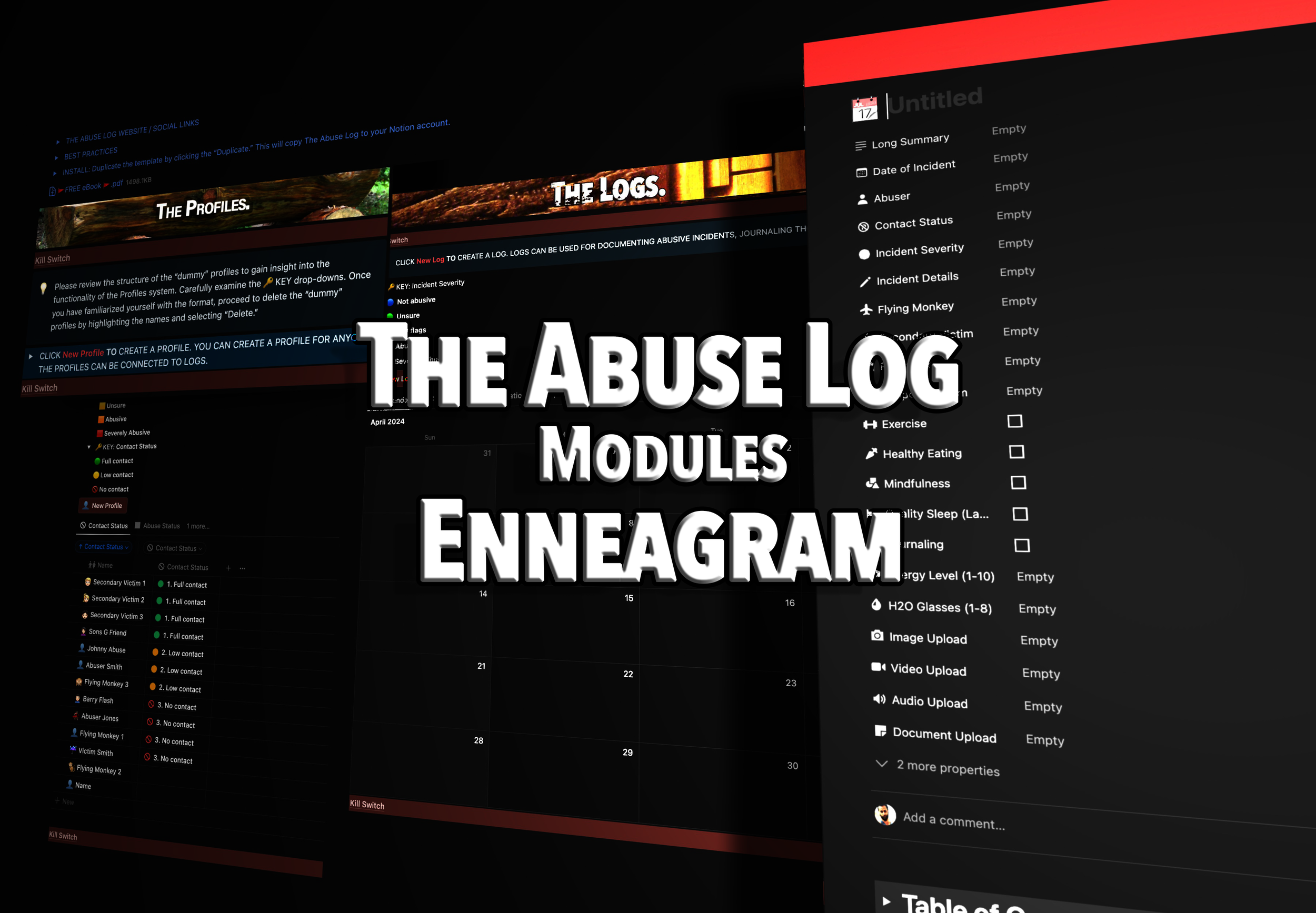
Cluster A Module
√ Paranoid Traits
√ Schizoid Traits
√Schizotypal Traits
Cluster B Module
√ Antisocial Traits
√ Antisocial ABUSE
√ Borderline Traits
√ Borderline ABUSE
√ BPD Associated
√ Histrionic Traits
√ Histrionic ABUSE
√ Narcissistic Traits
√ Narcissistic ABUSE
Cluster C Module
√ Avoidant Traits
√ Dependent Traits
√ Obsessive-Compulsive Traits

• Physical Abuse • Psychological Vol. 1 Abuse • Psychological Vol. 2 Abuse • Sexual Abuse • Financial Abuse • Medical Abuse • Educational Abuse • Elders Abuse • Psychologist Abuse • Lawyer Abuse….and more.


Childhood Trauma Bundle
12 Signs: Wounded Inner Child Module
10 Narcissistic Parenting Module
Attachment Styles Module
Parenting Styles Module
Enmeshment Test Module
Attachment Styles Module
Codependency Module





This product is made especially for you as soon as you place an order, which is why it takes us a bit longer to deliver it to you. Making products on demand instead of in bulk helps reduce overproduction, so thank you for making thoughtful purchasing decisions!


Dad hats aren't just for dads. This one's got a low profile with an adjustable strap and curved visor.
• 100% chino cotton twill


• 65% polyester, 35% viscose
• Athletic Heather is 52% polyester, 48% viscose
• Black Heather is 80% rayon, 20% polyester
• Fabric weight: 4.2 oz/y² (142 g/m²)
• Relaxed fit
• Low cut armholes
• Curved bottom hem
• Side seams
• Blank product sourced from Honduras, Nicaragua, the US, or Vietnam
This product is made especially for you as soon as you place an order, which is why it takes us a bit longer to deliver it to you. Making products on demand instead of in bulk helps reduce overproduction, so thank you for making thoughtful purchasing decisions!
Self-Worth: The Fragile Core
Narcissists are masters at eroding self-esteem. They might have made you feel unlovable, unworthy, or perpetually inadequate. Even long after the relationship ends, their voice can echo in your mind, making you question whether anyone could truly love you.
This diminished self-worth can manifest in two ways:
Avoidance: You might avoid relationships altogether, convinced you’re not good enough.
Over-Accommodation: You might bend over backward to keep someone in your life, afraid of being abandoned again.
Attachment Triggers
Your attachment style may have shifted during or after the relationship. Those with secure attachment styles might find themselves adopting anxious or avoidant attachment patterns. You may cling tightly to reassurance or pull away at the first sign of emotional intimacy.
Understanding these attachment triggers is crucial to moving forward without sabotaging potential connections.
3. Healing and Reclaiming Intimacy: Steps Toward Healthy Relationships
1. Rebuild Your Sense of Self
Before re-entering the dating world, focus on rebuilding your identity outside of romantic relationships. Who are you when you’re not someone’s partner? What are your values, goals, and passions?
Journaling: Write about your experiences and emotions.
Therapy: Trauma-informed therapy, especially EMDR or CBT, can address deeply ingrained patterns.
Self-Compassion: Speak to yourself with kindness. Challenge the inner critic when it echoes the narcissist’s voice.
2. Educate Yourself About Healthy Love
Many survivors of narcissistic abuse have never experienced truly healthy love. Take time to learn what a secure, respectful, and mutually fulfilling relationship looks like.
Read Books on Attachment Theory and Healthy Relationships: Attached by Amir Levine and Rachel Heller is an excellent starting point.
Observe Healthy Relationships: Notice how emotionally mature couples handle conflict, express love, and build trust.




Explore how narcissists weaponize cognitive dissonance and external loci of control in family court. Learn how false allegations, parental alienation, and litigation abuse destabilize justice—and how victims can fight back with forensic documentation and accountability.

Discover how narcissists create cognitive dissonance by projecting control yet blaming external forces. Explore the psychology, philosophy, and consequences of their reliance on external loci of control.

Covert narcissistic mothers often weaponize haircuts to de-gender their children, undermining paternal authority, sabotaging bonding, and inflicting psychological abuse without bruises. This subtle but destructive tactic fosters alienation, gaslighting, and identity sabotage—leaving scars that ripple through generations.

Most survivors don’t stay silent because they don’t care. They stay silent because they don’t have the words. Psychological abuse thrives in confusion—and that’s why naming it is revolutionary. Once you know the terms, you stop questioning yourself and start recognizing the pattern. That’s where healing begins—and where The Abuse Log turns language into power.





Communication is the foundation of any healthy relationship. Whether in romantic partnerships, friendships, or family dynamics, open dialogue is essential for trust, connection, and resolution of conflicts. However, one of the most damaging communication tactics is the silent treatment. This form of emotional withholding can create deep wounds, foster resentment, and erode the very foundation of the relationship.


3. Develop Emotional Boundaries
Narcissists trample boundaries, often making you feel guilty for asserting them. In future relationships, practice setting clear emotional boundaries early on.
Learn to Say No: Without guilt or over-explaining.
Identify Your Non-Negotiables: What are your core relationship needs and deal-breakers?
4. Start Slowly and Mindfully
When you do feel ready to date again, take it slow. Notice how you feel in the presence of this person. Are you anxious? At ease? Are you reverting to old people-pleasing habits?
Check In With Yourself Regularly: Are you acting out of fear or genuine connection?
Communicate Transparently: Share your fears and boundaries openly with your partner.
5. Trust Your Gut Again
One of the narcissist’s most damaging tactics was making you doubt your instincts. Rebuilding trust in your gut feeling is a crucial step toward healing.
Practice Small Acts of Self-Trust: Make small decisions and notice when your intuition feels aligned.
Red Flags vs. Trauma Responses: Learn to differentiate between genuine red flags and trauma-induced overreactions.
Final Thoughts: Are You Ruined, or Are You Reborn?
The idea that a narcissist has the power to “ruin” you implies permanence, but healing is not only possible—it’s probable with intention and effort. The scars left by narcissistic abuse don’t have to define your future relationships.
Survivors often emerge from these experiences with profound emotional depth, heightened empathy, and a sharp ability to recognize toxicity. These are strengths, not weaknesses.
You are not ruined. You are in the process of rebuilding—a process that might feel slow, but every brick you lay is a testament to your resilience.
Healthy love exists, and you deserve it. It starts with the relationship you rebuild with yourself.
Remember: Healing isn’t linear, and setbacks are part of the journey. But every step forward is a victory.
And no, the narcissist didn’t ruin you. They may have left a mark, but you get to decide what happens next.
Initial Abuse Log® Consultation
This initial consultation is a guided, confidential conversation designed to help you bring clarity to what you’ve been experiencing—and determine whether The Abuse Log® tools, documentation methods, or services are a good fit for your situation.
If things have felt confusing, chaotic, or hard to explain—this is where we slow it down.
What this consultation is
A structured, supportive review of your concerns and goals
A space to identify patterns, timelines, and types of behavior that may be present
An overview of how forensic-style documentation can help restore clarity, stability, and agency
A walkthrough of relevant Abuse Log® tools, templates, or services, tailored to your needs
This is not therapy.
This is not legal advice.
This is not an interrogation.
It is a practical, grounded conversation focused on understanding, organization, and next steps—without pressure or judgment.
What this consultation is not
We do not diagnose, label, or pathologize
We do not tell you what to do or how to feel
We do not replace attorneys, clinicians, or law enforcement
Instead, we help you translate lived experience into clear, usable information—so you can decide what comes next.
Who this is for
This consultation may be helpful if you:
Feel like something is “off” but can’t quite articulate it
Are dealing with ongoing conflict, manipulation, or coercive dynamics
Need help organizing incidents, timelines, or communications
Want to document patterns in a way that is clear, factual, and defensible
Are preparing for—or already navigating—legal, therapeutic, workplace, or custody-related processes
What you’ll leave with
Greater clarity about what you’re dealing with
A clearer sense of whether documentation is appropriate
Practical insight into tools or systems that may help
Optional next steps—only if and when you’re ready
No pressure. No upsell. No obligation.
Just clarity.